Machine Connectivity: How to Connect Your Factory in 30 Days
Discover the step-by-step process to connect your factory in just 30 days, from strategic audit to AI agent integration.
Introduction
Machine connectivity in factories is a hot topic on everyone's lips within Quebec manufacturing companies. However, the subject can be intimidating and feel like a tsunami of information. How do you connect your factory's machines? Who should you work with? What are the best practices? This is what we'll attempt to answer in this article.
Days 1 to 6: Strategic Audit - Don't Connect Anything Before Mapping
The first step of a successful transition to connected machines is to develop a solid plan. To do this, it's advisable to meet with a domain expert, like Artemis Intelligence. During this meeting, you'll identify the factory's critical points. The goal is to connect an initial pilot machine that will quickly pay for itself through time saved and the value of collected data. The objective is to have an instant ROI with the first machine connection.
Next, we map the rest of the machines to understand the fleet's heterogeneity. In other words, we seek to know if multiple communication protocols need to be integrated and what potential extension modules will need to be installed to capture the desired data.
You'll also need to determine the network infrastructure configuration and how the modules will be integrated into this environment. It's important at this stage to note environmental conditions (physical constraints, humidity, extreme temperatures, etc.).
Days 6 to 15: Physical Integration of Modules
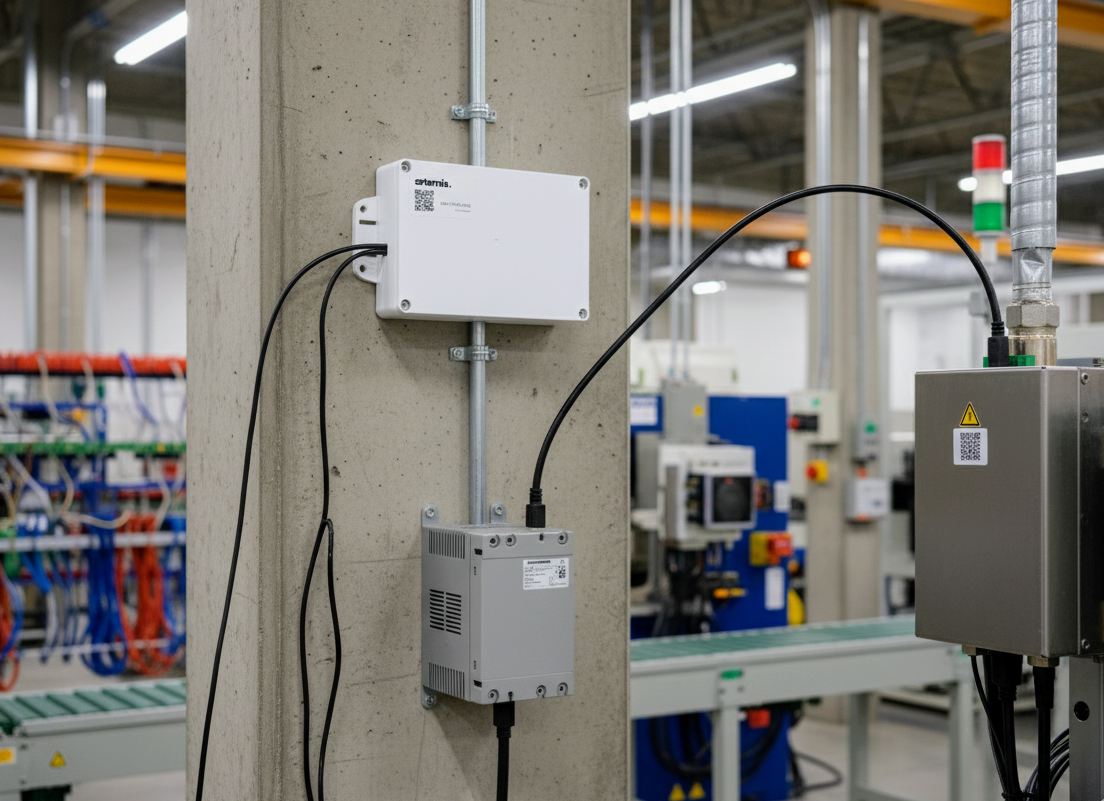
Once the previous steps are completed, we're ready to proceed with module installation. According to strategies chosen by the service provider, it's very relevant that the cards be connected in parallel to the production line. This way, the company's regular operations are not impacted by the installation or future adjustments.
Once the cards are connected, the extension modules selected in the previous step are put in place. These are configured and ready to capture critical data.
Days 16 to 21: Data Centralization on Cloud Servers
It's at this stage that we begin receiving and storing the first data retrieved through machine connectivity. This end-to-end encrypted tunnel ensures the sustainability and security of collected data. We then analyze the volume of data received and the desired precision. Thus, the sending rate is customized to reach the sweet spot between the amount of data stored and the necessary real-time precision. This operation is performed to optimize real-time data access speed, as well as report and graph generation.
Days 21 to 25: Integration and Preparation of Initial Dashboards
Now that the machines are connected and data validity is confirmed, the next step is to select the graphics to integrate into the dashboard. It's crucial to choose relevant visuals, as these must reflect and highlight your KPIs and maintenance indicators. Connecting machines is one thing, but being able to use the data to make concrete decisions is another. To do this, we must have a way to translate these thousands of data points into clear and tangible metrics.
Days 26 to 30: AI Agent Integration and Process Optimization
Now that our machines are connected, data is centralized and translated into usable metrics, the final step consists of optimizing processes and improving problem detection. The strategy used at Artemis Intelligence is to integrate AI agents that can be asked concrete questions about collected data, to quickly get a global overview of the factory's state. With the graphics from the previous step, we can quickly see the throughput difference between this week and last week. With the AI agent, we can ask it the most frequent causes of machine stoppages, for example. Or even ask if at this production rate, the week's production goal will be met. Additionally, automations are recommended to trigger alerts or initiate processes when a threshold value or average is reached.
Conclusion
In summary, it's entirely possible to successfully complete a machine connectivity project in 30 days. However, keep in mind that a process like this is not a race and that each step must be executed carefully to be worthwhile. This article aimed to demonstrate that, despite the apparent scale of an Industry 4.0 factory project, it remains within reach of any company, regardless of its size or budget.